A phased public recreation initiative to establish Piešťany as Slovakia's leading destination for both wellness and youth athletic development.
To the Mayor of Piešťany, the City Council, the Trnava Self-Governing Region, and all public officials responsible for shaping the future of our community:
This proposal respectfully requests the adoption of a phased public recreation initiative that begins with expanding access to existing facilities and culminates in the construction of a modern municipal recreation center serving Piešťany and the surrounding region.The long-term vision is a public recreation campus — indoor basketball and multi-purpose courts, swimming facilities, fitness and weight-training areas, outdoor football fields, baseball or softball fields, tennis and pickleball courts, community spaces, and year-round programming accessible to everyone.This proposal is not simply about constructing another building.It is about defining the future identity of Piešťany.Piešťany is already where Slovakia recovers.Now it has the opportunity to become where Slovakia trains.
Investing in youth is investing in Slovakia's future.
Every Olympic champion… Every NHL player… Every football star… Every world champion…Started as a child.No child is born an elite athlete.Champions are built through thousands of hours of practice, repetition, coaching, and perseverance.Governments cannot create talent. Governments can create opportunity.Every child deserves the opportunity to discover what they are capable of.Every municipality has children with extraordinary potential.Some will become doctors. Some will become teachers. Some will become entrepreneurs. Some may one day represent Slovakia on the world's biggest stages.The question is whether they will be given the opportunity to discover that potential.A recreation center is not simply a building.It is an investment in the next generation of Slovak citizens.
Slovakia already produces world-class athletes.
For a nation of just over five million people, Slovakia has consistently produced extraordinary athletes.Juraj Slafkovský became the first overall pick in the NHL Draft. Peter Sagan became one of the greatest cyclists of his generation. Petra Vlhová became an Olympic champion. Marek Hamšík became one of Slovakia's greatest footballers.
These athletes prove something important. Slovakia does not lack talent. It never has.But imagine how many gifted children never reach their potential — not because they lacked ability, but because they lacked access.How many future athletes never discover what they are capable of because there was nowhere nearby to practice — no indoor court in winter, no gym that stays open after school?The families who can already send their children abroad to train — to Austria, or as far as Spain — because the facilities here do not exist. Talent, and the investment that follows it, quietly leaves Slovakia.How many dreams quietly disappear before they ever have the chance to begin?Talent is distributed equally. Opportunity is not.If Slovakia wishes to compete with the world's best, investment must begin where every athlete's journey begins: at the local level.
Why Piešťany?
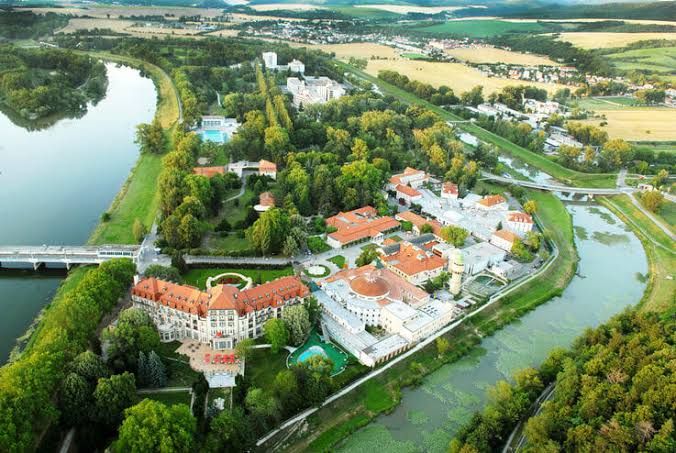
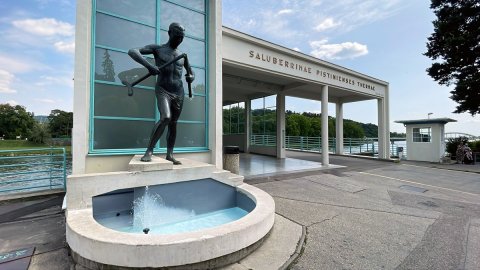
Piešťany's spa island (Kúpeľný ostrov) and its internationally recognised wellness identity — the foundation this initiative builds upon.
This is perhaps the most important question. Why should Piešťany become the home of this initiative?Because no other town in Slovakia is better positioned.Piešťany has already earned international recognition for health. People travel here to recover. To rehabilitate. To become stronger.But recovery is only half of wellness. The other half is movement.Exercise. Strength. Sport. Lifelong physical activity.Why shouldn't Slovakia's wellness capital also become Slovakia's youth sports capital? Why shouldn't families from across western Slovakia come to Piešťany not only for rehabilitation, but also for recreation? Why shouldn't national youth tournaments be hosted here? Why shouldn't schools, sports clubs, rehabilitation specialists, and physicians work together to build one of the healthiest communities in Europe? Why shouldn't the next generation of Slovak athletes begin their journey here?Piešťany already has the foundation. This initiative simply builds upon it.Piešťany can become known not only as where Slovakia recovers — but where Slovakia trains.
Build upon Piešťany's existing identity.
Very few municipalities possess a brand as respected and recognizable as Piešťany — built over generations through excellence in health, rehabilitation, and wellness.A recreation initiative does not change that identity. It completes it.Exercise is one of the most effective forms of preventative medicine available. It improves cardiovascular health, strengthens muscles and bones, supports mental health, reduces chronic disease, and promotes healthy aging.A municipality dedicated to helping people recover should also be dedicated to helping people remain healthy throughout their lives.Recovery and recreation belong together.
Fill the missing piece.
Despite its reputation, Piešťany lacks one of the most important pieces of public infrastructure for developing healthy communities.Imagine growing up in a city without a public indoor basketball court, open gym hours, a municipal recreation center, indoor facilities during winter, public weight rooms, or affordable places where families can exercise together.Outdoor facilities are valuable. But weather, darkness, and winter limit access for months every year.Children cannot develop their skills if they have nowhere to practice.Communities cannot become healthier if facilities simply do not exist.Infrastructure creates opportunity. Today, that opportunity is missing.
Recreation is an investment — not an expense.
A recreation center should not be viewed simply as another municipal expense. It is long-term infrastructure that creates long-term value.It attracts youth tournaments, regional championships, sports tourism, swimming competitions, basketball tournaments, training camps, and community events.Visitors stay in hotels. Families dine in restaurants. Local businesses benefit. Athletes return year after year.A recreation center also helps attract young families choosing where to live. Communities increasingly compete not only on jobs and housing, but on quality of life.Investing in recreation is investing in economic development.
Recreation is preventative healthcare.
Every euro invested in encouraging lifelong physical activity has the potential to reduce future healthcare costs.Regular exercise reduces the risk of obesity, diabetes, cardiovascular disease, depression, anxiety, and osteoporosis.Children who grow up active become healthier adults. Healthier adults require fewer medical interventions.For a municipality whose identity is centered around health, recreation is not a separate mission. It is a continuation of the same mission.
Opportunity should not depend on income.
One of the greatest strengths of public recreation is that it belongs to everyone.Private clubs often require significant financial resources. Not every family can afford private coaching, memberships, or specialized facilities. Public recreation removes that barrier.Every child deserves the opportunity to shoot baskets after school, learn to swim, play football, skate, lift weights safely, and discover a lifelong passion.The next Juraj Slafkovský may simply need an ice rink. The next Olympic swimmer may simply need a pool. The next football star may simply need a field. The next basketball player may simply need a gym that stays open after school.Talent is distributed equally. Opportunity is not. Public recreation helps close that gap.That is not simply an investment in sport. It is an investment in social mobility.
Stronger communities.
A recreation center is far more than a sports facility. It becomes one of the community's most valuable public spaces.Parents volunteer as coaches. Children build friendships. Teenagers have somewhere safe after school. Families spend time together. Older adults remain active. Neighbours meet one another. Community organizations host programs. Local leagues grow.Communities become stronger.In an era where young people spend increasing amounts of time online, municipalities should create more places where people gather in person.A recreation center becomes a true community home.
A practical path forward.
Each phase produces its own outcomes and generates the evidence needed to unlock the next. The first step does not require constructing a new building — only making better use of one that already exists.
Phase 10–6 mo
Open existing facilities
Introduce public hours at Diplomat Arena, outside training and competitions
A modest €3–€4 fee — increasing access, encouraging healthier lifestyles, and generating revenue
Measures real demand, with no new construction required
Phase 26–18 mo
Measure demand
Collect data on attendance, memberships, youth and league participation, and utilization
Gather community feedback from residents, schools, clubs, and physicians
Evidence-based planning that strengthens future funding applications
Phase 318+ mo
Build the Piešťany Recreation Center
Indoor courts, a swimming pool, fitness and weight training, and an indoor walking track
Outdoor football, baseball/softball, tennis, and pickleball
Rehabilitation and wellness partnerships, classrooms, and community meeting spaces
A vision for the next fifty years.
Every generation has the opportunity to build something that shapes the future long after today's leaders have left office.Roads connect people.Schools educate people.Hospitals heal people.Recreation centers strengthen people.
The decisions made today determine what opportunities children will have tomorrow. The question is not whether Slovakia has talented young people. It does. The question is whether they will have the opportunity to discover what they are capable of.Piešťany already stands as one of Slovakia's greatest symbols of health and recovery. Now it has the opportunity to become something even greater.A municipality where families gather. Where communities grow stronger. Where healthier lives begin. Where tomorrow's Slovak athletes take their first steps.The return on this investment will not only be measured in euros. It will be measured in healthier citizens, stronger communities, greater economic opportunity, and national pride — and generations of young Slovaks given the opportunity to become everything they were capable of becoming.Piešťany can become more than where Slovakia recovers. It can become where Slovakia trains.We respectfully urge the Municipality of Piešťany, the Trnava Self-Governing Region, and all relevant public partners to begin this initiative — by expanding public access to existing facilities, developing a long-term recreation master plan, and committing to a municipal recreation center worthy of Piešťany's reputation and Slovakia's future.
—residents & supporters and counting have added their names.
Appendix
Your questions, answered.
The case is made above. Here are the questions a council rightly asks — and the evidence that answers each one. Drawn from WHO, OECD, the European Parliament, and primary municipal sources.
Public health
What are the health benefits — and the savings?
Physical inactivity is the single largest preventable driver of long-term healthcare cost across the European Union — where Piešťany's economic case begins.
US$300bn
estimated global healthcare cost of physical inactivity, 2020–2030
€8bn
annual EU healthcare savings if WHO activity targets are met
10,000+
premature deaths preventable per year across the EU
The €1.70 return
A joint OECD–WHO analysis finds that every €1 invested in physical activity generates approximately €1.70 in economic benefits — through reduced healthcare costs, improved productivity, and increased life expectancy. A recreation centre is not a cost to the municipality; it is one of the highest-return public investments a municipality can make.
Regular exercise measurably reduces the most common — and most expensive — chronic diseases in the Slovak system: cardiovascular disease (the country's leading cause of death), type 2 diabetes, obesity, certain cancers, osteoporosis, and depression.
Local economy
What is the economic return for Piešťany?
Sport is a genuine economic sector — one that generates jobs, tax revenue, and place-brand value for the municipalities that invest in it.
€300bn+
annual gross value added of the EU sport sector
6M
jobs supported by sport across the European Union
5.9%
annual growth of amateur & youth sports tourism since 2005
What tournaments actually generate
Tournaments don't just fill gyms. They fill hotels, restaurants, taxis, cafés, and shops — and they do so during shoulder seasons when traditional spa tourism is quieter. Families travelling for youth sport typically stay 2–4 nights and spend at multiple local businesses per trip. For Piešťany, sports tourism complements the existing wellness economy, rather than replacing it.
Proven elsewhere
Where has this worked before?
Both are real, publicly-operated recreation centres in cities comparable to Piešťany — proof that municipalities of this size can build and sustainably run facilities of this kind.
Carlsbad, California · pop. ~115,000
Calavera Hills Community Center
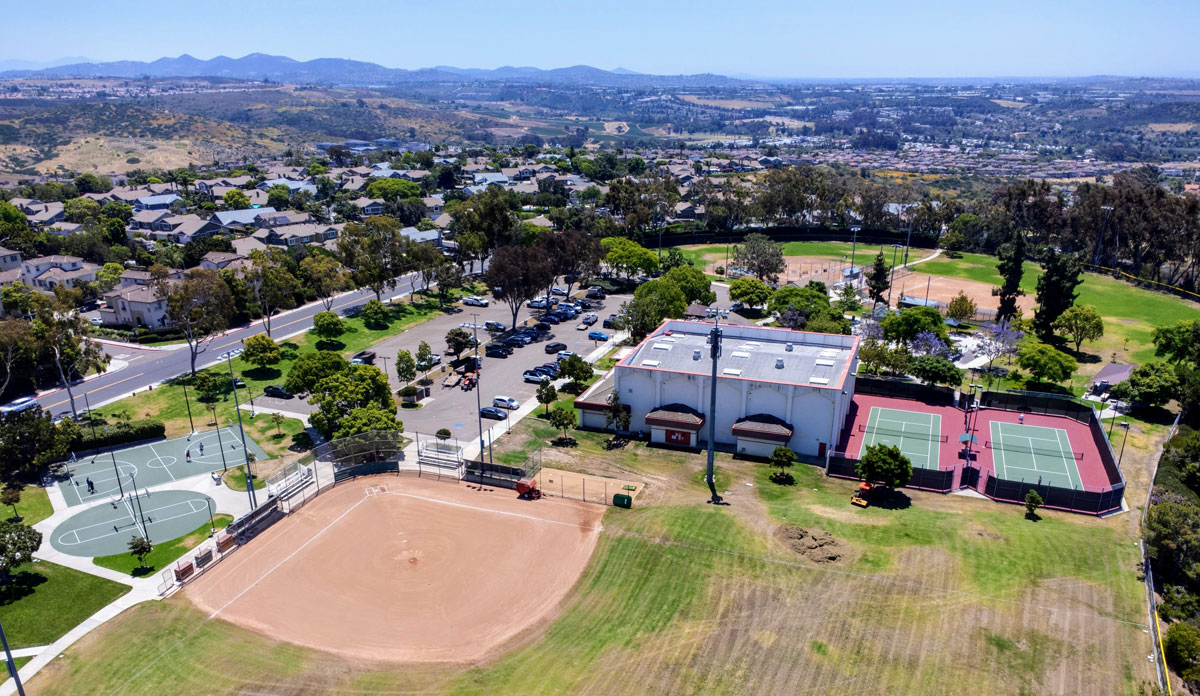
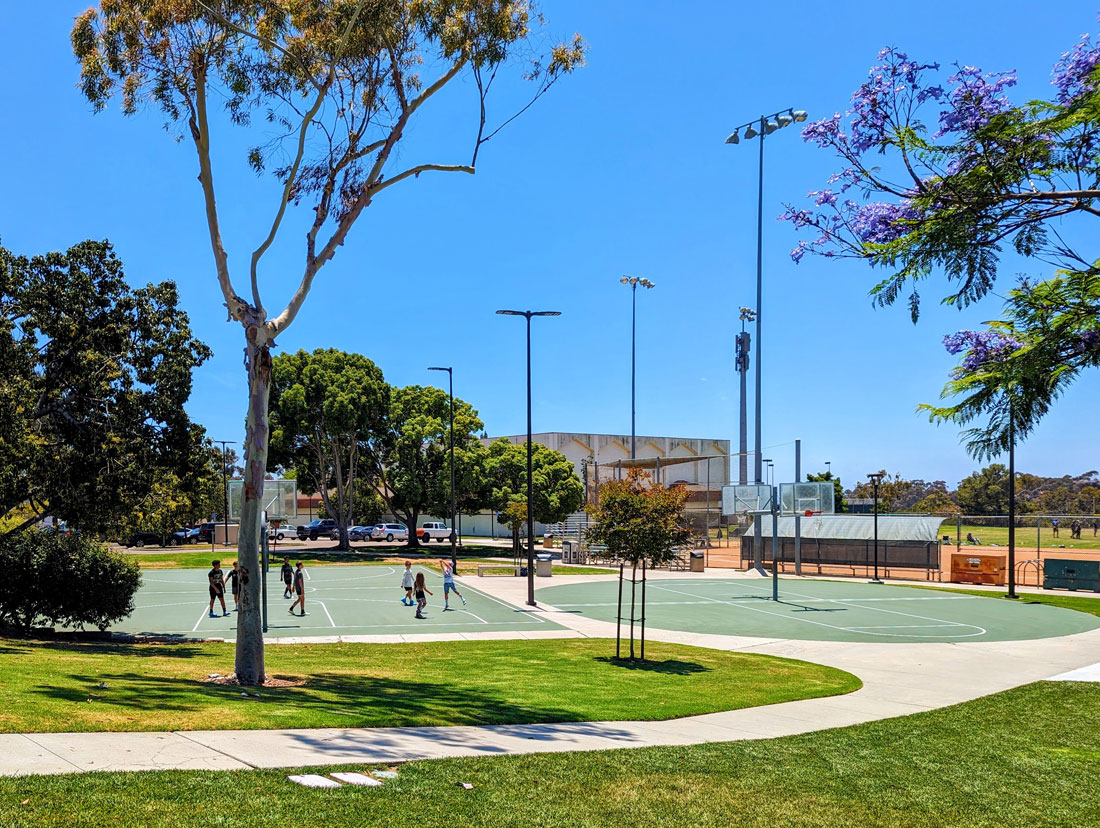
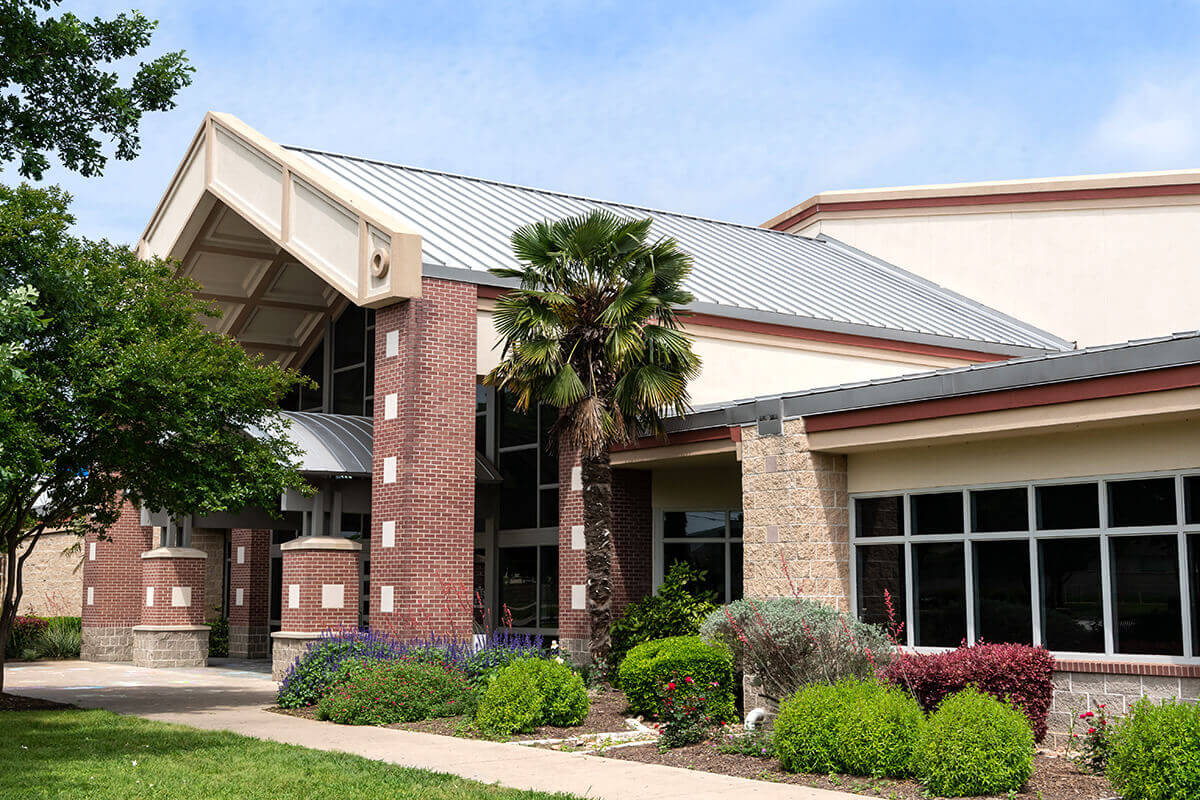
The 21-acre Calavera Hills park and community centre — courts, fields, and walking paths in daily use. Photos courtesy of the City of Carlsbad.
18,000 sq ft community centre with an integrated 21-acre outdoor park — gymnasium, lighted baseball/softball fields, basketball, tennis and indoor pickleball courts, walking paths, and a community garden.
What Piešťany can learn — Carlsbad is a tourism-oriented coastal city that invested in resident-serving recreation and did not dilute its wellness brand. If anything, it strengthened it.
Round Rock, Texas · pop. ~130,000
Clay Madsen Recreation Center
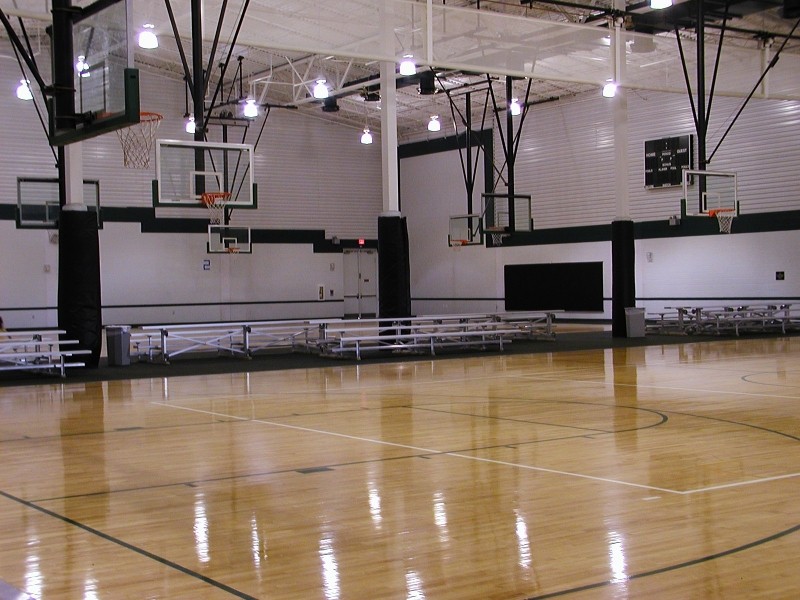
The 55,000 sq ft Clay Madsen Recreation Center and one of its two full-size gymnasiums. Photos courtesy of the City of Round Rock, Texas.
55,000 sq ft comprehensive facility — two full-size gymnasiums, a 6-lane indoor lap pool, racquetball courts, a full cardio and weight-training centre, and family spaces, open 05:00–22:00.
What Piešťany can learn — A pool, two gyms, racquet courts and fitness under one roof. Municipal ownership with public–private operation is a proven, sustainable model at exactly this scale.
Funding
How can this be funded?
The initiative can be responsibly financed through a blended approach drawing on European, national, regional, and private sources — never a single line in the municipal budget.
Source
Programme / instrument
Indicative role
European Union
EU · ERDF
European Regional Development Fund — Programme Slovakia 2021–2027
Primary capital funding; Slovakia's Partnership Agreement allocates €12.8bn in total EU cohesion funding.
EU
Cohesion Fund · Interreg SK–CZ & SK–AT
Supporting infrastructure and cross-border cooperation for shared projects and tournaments.
Slovak Republic
National
Fond na podporu športu — INFRA
Primary national mechanism. Up to €1,000,000 per project; 30% minimum co-financing.
National
Ministry of Tourism & Sport
Subsidy support for programming, events, and sporting activities.
Regional, municipal & private
Regional
Trnava Self-Governing Region & municipal budget
Co-financing, land contribution, and integration with regional tourism strategy.
Private
PPP, naming rights & operational revenue
Facility operation, sponsorship, memberships, tournament fees, and spa-recreation packages.
A realistic financing structure
EU / ERDF 50–65% · Fond na podporu športu 15–25% · Municipal + Trnava Region 10–20% · PPP / sponsorship 5–15%. Consistent with comparable EU-funded projects, including the Slovenj Gradec sports-hall extension in Slovenia, 85% ERDF-funded through cohesion policy.
Sources
Where does the evidence come from?
All statistics and citations are drawn from public, primary, or authoritative secondary sources as of July 2026 — 16 primary and authoritative secondary references.